Introduction
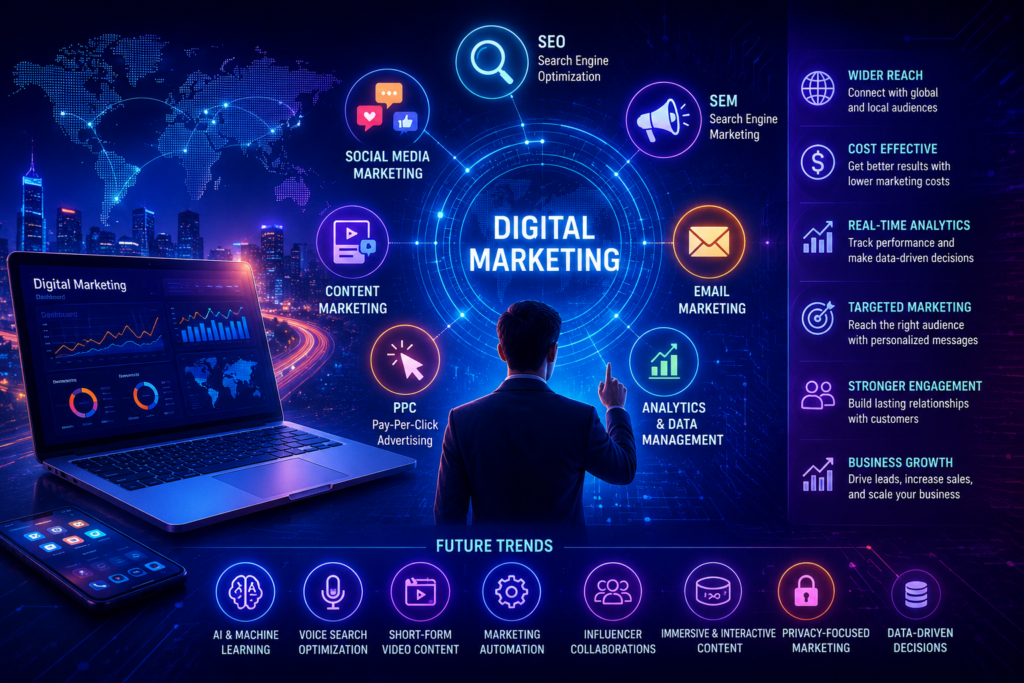
The way businesses connect with customers has changed dramatically over the last decade. With millions of people using the internet every day, digital platforms have become the primary place where customers discover products, compare services, and make purchasing decisions. This shift has made digital marketing one of the most valuable business strategies in the modern world.
Whether you’re a small business owner, entrepreneur, freelancer, or a large organization, digital marketing provides opportunities to reach the right audience, build trust, and generate consistent growth. As technology continues to evolve, the scope of digital marketing is expanding faster than ever.
What Is Digital Marketing?
Digital marketing refers to the promotion of products, services, or brands through online channels such as search engines, websites, social media, email, and mobile applications. Unlike traditional marketing, digital marketing allows businesses to interact directly with their audience while measuring campaign performance in real time.
It combines creativity, technology, and data to create meaningful customer experiences and drive business success.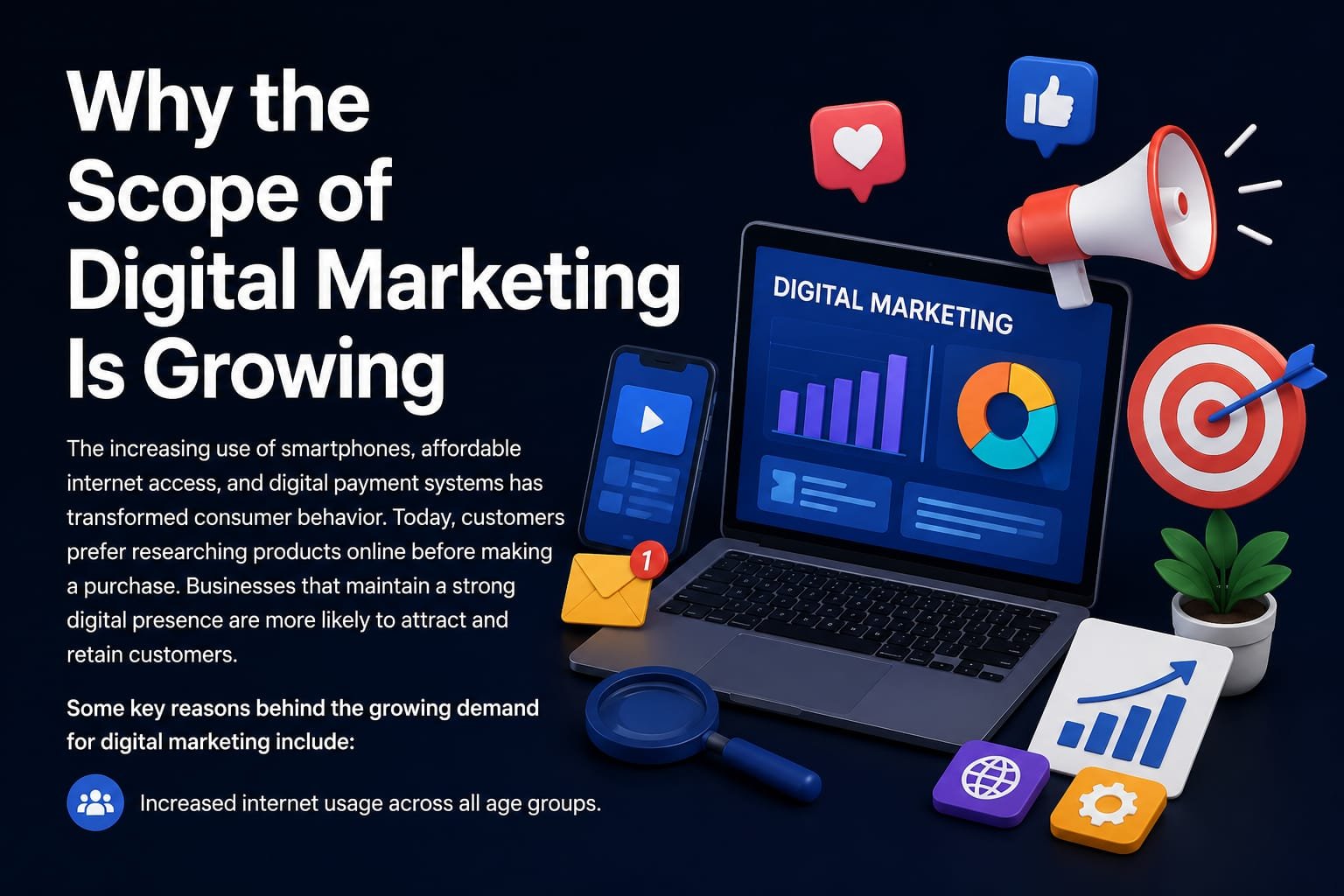
Why the Scope of Digital Marketing Is Growing
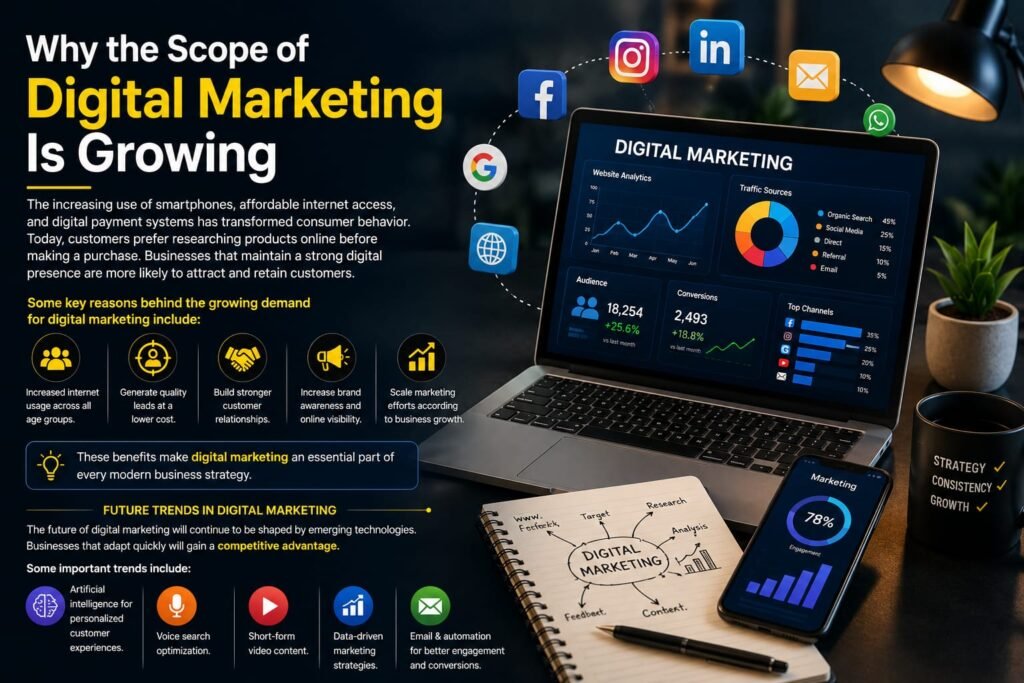
The increasing use of smartphones, affordable internet access, and digital payment systems has transformed consumer behavior. Today, customers prefer researching products online before making a purchase. Businesses that maintain a strong digital presence are more likely to attract and retain customers.
Some key reasons behind the growing demand for digital marketing include:
- Increased internet usage across all age groups.
- Growth of online shopping and e-commerce.
- Rising popularity of social media platforms.
- Better customer targeting through data analytics.
- Cost-effective marketing compared to traditional advertising.
- Easy tracking and measurement of campaign performance.
These factors make digital marketing an essential investment for businesses of every size.
Major Areas of Digital Marketing
Digital marketing consists of several specialized fields that work together to achieve marketing goals.
Search Engine Optimization (SEO)
SEO focuses on improving a website’s visibility in search engine results. Higher rankings help businesses attract organic traffic, increase credibility, and generate long-term leads without relying entirely on paid advertising.
Social Media Marketing (SMM)
Social media platforms allow businesses to connect with their audience, share valuable content, build brand awareness, and engage customers through interactive campaigns.
Search Engine Marketing (SEM)
SEM involves paid advertising on search engines to attract potential customers instantly. Businesses can target users based on keywords, location, interests, and purchasing intent.
Content Marketing
High-quality content helps businesses educate customers, answer questions, and establish authority in their industry. Blog posts, videos, infographics, and guides all contribute to stronger customer relationships.
Email Marketing
Email remains one of the highest-performing digital marketing channels. Personalized email campaigns help nurture leads, promote offers, and encourage repeat purchases.
Pay-Per-Click (PPC) Advertising
PPC advertising enables businesses to pay only when users click on their ads. It provides quick visibility and measurable results for lead generation and sales.
Analytics and Data Management
Modern digital marketing relies heavily on data. Analytics tools help marketers understand customer behavior, optimize campaigns, and improve return on investment (ROI).
 Career Opportunities in Digital Marketing
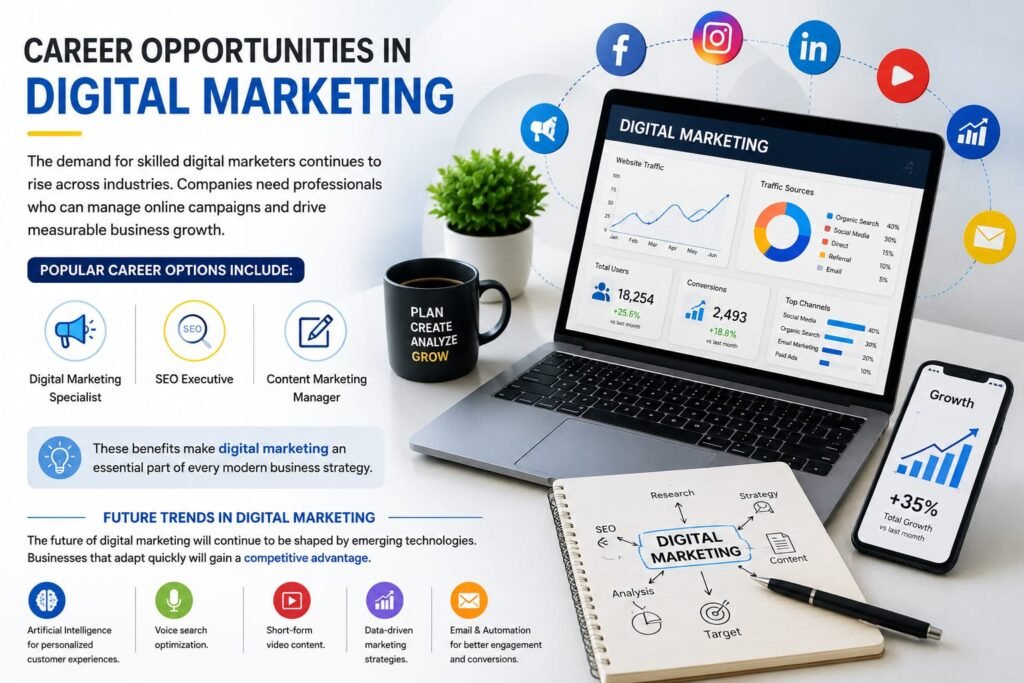
The demand for skilled digital marketers continues to rise across industries. Companies need professionals who can manage online campaigns and drive measurable business growth.
Popular career options include:
- Digital Marketing Specialist
- SEO Expert
- Social Media Manager
- Content Strategist
- PPC Specialist
- Email Marketing Specialist
- Marketing Analyst
- Digital Marketing Consultant
- Freelance Digital Marketer
- Marketing Automation Specialist
Many professionals also choose freelancing or start their own digital marketing agencies, offering services to clients worldwide.
Benefits for Businesses
Digital marketing provides several advantages that traditional marketing often cannot match.
Businesses can:
- Reach customers across local and global markets.
- Target specific audiences based on interests and behavior.
- Monitor campaign performance in real time.
- Generate quality leads at a lower cost.
- Build stronger customer relationships.
- Increase brand awareness and online visibility.
- Scale marketing efforts according to business growth.
These benefits make digital marketing an essential part of every modern business strategy.
 Future Trends in Digital Marketing
The future of digital marketing will continue to be shaped by emerging technologies. Businesses that adapt quickly will gain a competitive advantage.
Some important trends include:
- Artificial intelligence for personalized customer experiences.
- Voice search optimization.
- Short-form video content.
- Marketing automation.
- Influencer collaborations.
- Interactive and immersive content.
- Privacy-focused marketing strategies.
- Data-driven decision making.
Staying updated with these trends will help businesses remain competitive in an evolving digital landscape.
Conclusion
Digital marketing is no longer an optional business strategy—it is a necessity. As consumers spend more time online, businesses must establish a strong digital presence to remain competitive. From improving brand visibility to generating leads and increasing sales, digital marketing offers endless opportunities for growth.
For aspiring professionals, digital marketing provides a rewarding career with continuous learning and global opportunities. For businesses, it delivers measurable results, stronger customer engagement, and sustainable success.
As technology advances and consumer behavior evolves, the scope of digital marketing will continue to expand, making it one of the most important industries of the future.